
As digital systems demand faster responses and lower latency, traditional cloud computing alone is no longer sufficient for many use cases. Edge computing addresses this challenge by processing data closer to where it is generated. This approach is transforming real time applications across industries such as healthcare, manufacturing, and smart cities.
This blog explains what edge computing is, how it works, and why it is critical for real time applications.
Table of Contents
What Is Edge Computing
Edge computing is a distributed computing model where data processing happens near the data source rather than in centralized cloud servers. This reduces latency and bandwidth usage while improving responsiveness.
According to explained by IBM, edge computing enables faster decision making for time sensitive applications.
Why Edge Computing Is Important
Many modern applications require real time processing and cannot afford delays caused by cloud round trips. Edge computing ensures faster responses and better reliability. The importance explains how it supports low latency workloads.
Edge Computing vs Cloud Computing
Cloud computing offers scalability and centralized management, while it focuses on proximity and speed. In practice, most systems use a hybrid approach combining both. The edge vs cloud comparison explains how these models complement each other.
Role of in Real Time Applications
Real time applications such as autonomous vehicles, industrial automation, and video analytics rely on immediate data processing. It enables these systems to operate efficiently. The real time processing overview highlights how edge infrastructure supports time critical workloads.
Edge Computing in Internet of Things
IoT devices generate massive amounts of data. Processing this data at the edge reduces network congestion and enables faster insights.
How it works
- Data Generation: IoT devices (sensors, cameras, machines) create massive amounts of data.
- Edge Processing: Instead of sending all raw data to the cloud, an edge device (gateway, local server, or even the device itself) processes it locally.
- Filtering/Analysis: The edge device filters, aggregates, or runs analytics on the data in real-time.
- Action/Transmission: Only relevant, processed data or critical alerts are sent to the cloud, reducing network traffic and delays.
Use Cases
Common use cases include smart manufacturing, healthcare monitoring, content delivery, and augmented reality. These applications benefit from reduced latency and improved reliability. It use cases explain how industries adopt edge solutions.
- Autonomous Vehicles: Real-time sensor data processing (lidar, radar) for immediate braking, lane changes, and navigation.
- Industrial IoT (IIoT) & Manufacturing: Predictive maintenance on machinery, quality control on assembly lines, and automated safety alerts.
- Healthcare: Instant analysis of patient vitals, remote surgery support, tracking hospital equipment, and real-time monitoring.
- Smart Cities & Utilities: Optimizing traffic flow, managing smart grids, and monitoring environmental conditions.
- Retail: In-store analytics for customer behavior, inventory management, and personalized offers.
- Telecommunications: Analyzing network performance in real-time, managing virtualized networks (vRAN), and improving customer experience.
- Oil & Gas: Monitoring remote rigs for equipment malfunctions and environmental hazards.
Edge Computing Architecture
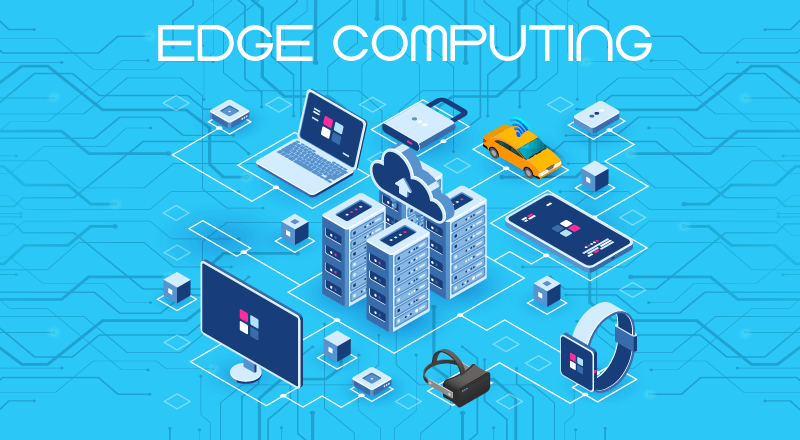
Edge architecture includes devices, gateways, and local servers that process data before sending relevant information to the cloud. The edge architecture overview explains how components interact.
Key Architectural Layers
- Device Layer (The Edge/Things): The data source – IoT sensors, cameras, mobile devices, machines – generating raw data.
- Edge Layer (The Local Compute): Small data centers, gateways, or edge servers near the devices, performing immediate analysis, filtering, & processing (e.g., containerized apps).
- Cloud Layer (The Central Brain): Traditional cloud for large-scale storage, deep analytics, & overall management, receiving summarized data from the edge.
Security Challenges at the Edge
Edge environments increase the attack surface due to distributed devices. Strong authentication, encryption, and monitoring are essential. The edge security best practices explain how to secure edge systems.
Scalability and Management
Managing thousands of edge devices requires automation and centralized monitoring. Cloud platforms often provide tools to manage edge deployments. The edge device management explains how large scale edge systems are controlled.
Performance Benefits
Edge computing reduces latency, improves bandwidth efficiency, and enables offline operations when cloud connectivity is limited. The latency reduction benefits explain why proximity matters.
- Reduced Latency: Processing data locally (at the “edge”) eliminates the delay of sending it to a central cloud, enabling near-instantaneous responses crucial for applications like autonomous vehicles, robotics, and video analytics.
- Bandwidth Efficiency: By analyzing and filtering data at the source, less raw data needs to be sent over networks, saving bandwidth and reducing transmission costs.
- Improved Reliability & Resilience: Edge systems can operate independently if the central network goes down, ensuring business continuity and preventing service disruptions.
Future of Edge Computing
With the growth of 5G and AI powered devices, edge computing will play an increasingly important role in real time systems. The future trends in it highlight emerging developments.
Conclusion
Edge computing is a key technology for building real time applications that demand speed, reliability, and efficiency. By processing data closer to the source, edge computing complements cloud infrastructure and enables new use cases.
As industries adopt real time and AI driven systems, edge computing will continue to shape the future of digital innovation.
Also check Ultimate Low Code and No Code Development Platforms 2026



[…] Also Check Edge Computing – Role in Popular Applications – 2026 […]